
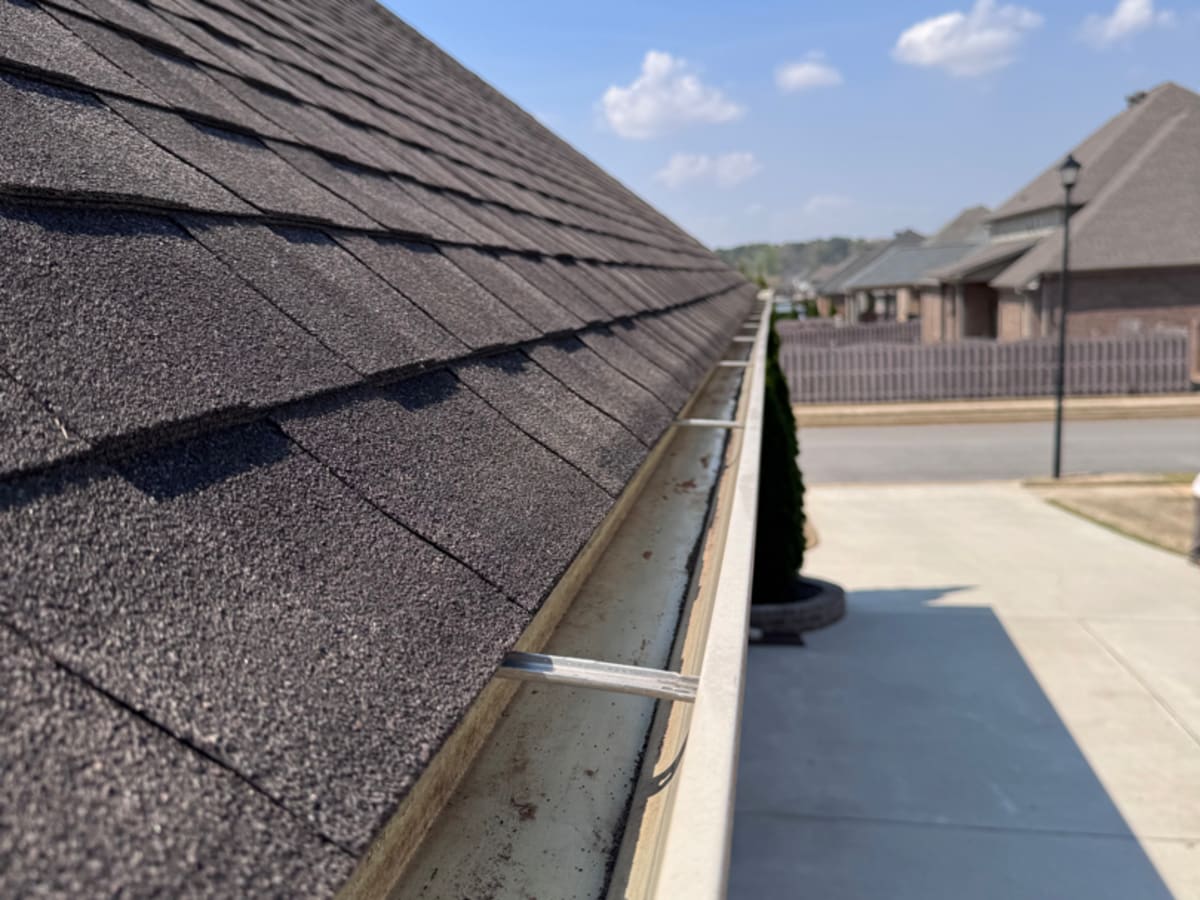
Every winter in North Alabama goes about the same way. It's 64 degrees on a Tuesday. You're in shorts. On Thursday it's 19 degrees, the grocery store is out of bread and milk, and there are icicles hanging off the gutter over the front porch like it's Minnesota.
By Sunday it's 58 again and the icicles are gone. So do gutters freeze in Alabama? Yes. Briefly, a few times a winter, and occasionally hard. Here's what that actually does to them, and the short list of things worth doing about it.
How Cold It Actually Gets Here
Some real numbers from the National Weather Service office in Huntsville. The average first freeze is around November 8, and the average last freeze is around March 20. The normal January low at the Huntsville airport is 33.1°F, right on the line. Huntsville averages about two days a season with measurable snow.
So most winter nights hover near freezing, and most days thaw out. That matters more for your gutters than the occasional deep freeze, for reasons we'll get to.
But "usually mild" isn't "always mild." Here's the strange-but-true winter fact: in January 2014, the eighth coldest January on record in Huntsville, the low fell below freezing on all but four days of the month, and on six days it never got above freezing at all. A gutter holding water that month held ice for most of it.
What Freezing Actually Does to Gutters
The Freeze-Thaw Cycle Works on the Seams
This is the quiet one. A night at 28°F and an afternoon at 52°F, over and over all winter, means the aluminum shrinks and grows every day. All that movement concentrates at the corners and end caps, where the sealant is. Freeze-thaw is a big reason a seam that was fine in October starts dripping in March. (More on that in why gutters leak at the seam.)
Any water sitting in a seam that freezes expands, and that pries at the sealant from the inside. One night won't do much. Forty nights will.
Standing Water Turns Into a Block of Ice
A properly sloped, clean gutter drains in minutes after a rain, so there's nothing left to freeze. A gutter with a low spot, a sag or a layer of wet leaves holds water. When that freezes, you've got a heavy bar of ice resting on the hangers and pushing on the seams. Ice weighs about as much as the water it came from, roughly 8 pounds a gallon, and it doesn't drain out between storms.
If you see icicles hanging from the middle of a gutter run, not the ends, that's a tell. Water is getting over the front lip or through a seam in that spot, which usually means a clog, a sag or a leak. Note where they are, and check that spot when it thaws.
Downspouts Freeze at the Bottom
The bottom elbow of a downspout is where leaves and grit pile up, and it's also the coldest, most sheltered spot in the system. A partly clogged elbow plus a hard freeze can turn the bottom of the downspout into a plug of ice. Then the next rain, or the afternoon thaw, backs up the whole downspout and spills over the gutter.
If you have underground drains, the same thing can happen at the pop-up emitter in the yard if it's full of mud or sitting in a low spot that holds water.
Ice Storms Bring the Weight and the Limbs
Our worst winter weather usually isn't snow. It's freezing rain. The Alabama Department of Insurance's winter guidance points out that snow and ice can snap tree limbs onto houses and that ice dams can cause interior water damage. For gutters, a coating of ice adds weight, and an ice-loaded limb dropping onto a gutter can bend it or rip it off the fascia.
Ice dams themselves, where snowmelt refreezes at the roof edge and backs water under the shingles, are rare here. They need snow sitting on a roof for days. When it happens, a clogged gutter makes it worse.
What Not to Do When There's Ice in the Gutters
The jokes go on hold for this part, because winter is when people get hurt doing gutter work.
Don't climb a ladder onto ice. Frost on the rungs, ice at the base, and a gutter that's slick on top. That's three ways to fall, and the ground is hard. If there's ice in the gutters, the ice will melt by itself in a day or two. It nearly always does here.
Don't chip ice out with a hammer or a screwdriver. Aluminum gutters dent and puncture easily, and you can crack the sealant at a seam you were trying to protect.
Don't throw rock salt in the gutters. Salt water is hard on metal and on the plants under the downspouts.
Don't pour hot water from a ladder. See rule one. And it refreezes as a thinner, slicker layer.
Do knock down big icicles from the ground if they're hanging over a doorway or walkway. Use a broom handle and stand to the side, not under them.
And an honest note on heat cables. Some homeowners ask about running heat tape in their gutters. For most North Alabama homes, it isn't worth it. We just don't get enough sustained freezing for it to pay off. The better fix is a gutter that drains completely, so there's nothing left in it to freeze.
Winter Is Actually a Good Time for Gutter Work
People tend to think of gutters as a spring and fall job. But a dry stretch of North Alabama winter is a perfectly good time to fix what's wrong. A few reasons:
You can see everything. With the leaves down, the roofline, the fascia and the overhanging limbs are all in plain view. Rot that hid behind summer foliage doesn't hide in January.
Sealant doesn't mind the cold. Good tripolymer gutter sealants are rated for application down to 0°F. What they need is dry metal, and a dry, sunny winter day after a dry day works fine. Wet metal is the problem, not cold.
The next big season is spring. North Alabama's heavy storms come in spring, along with pine pollen and the oak tassels. Anything you fix in December or January is ready when the hard rain starts. Anything you put off meets that rain as-is.
The one thing to avoid is ladder work on frosty or icy mornings. Wait until the afternoon sun has done its job, or wait for a better day.
The 20-Minute Winter Gutter Checklist
Do this after the leaves are done falling, usually early December here, and before the first real cold snap.
- Clean out the leaves. Wet leaves hold water, and held water freezes. Our how often to clean gutters guide has the timing for North Alabama's leaf and pine seasons.
- Flush every downspout with a hose until water runs out the bottom fast and clear. Pay attention to the bottom elbow.
- Look for standing water a couple of hours after you flush. Any puddle left in the gutter is a low spot that'll be ice in January. See our gutter slope guide.
- Check the seams and corners for drips while the water's running. Fix them before the freeze-thaw season goes to work on them.
- Check the discharge. Downspout extensions should still be attached and pointing away from the house, and pop-up emitters on underground drains should open freely and not be buried in mud. If yours stay clogged, see what to do about a clogged underground drain.
- Look up at the trees. Limbs hanging over the roof are the ones that come down in an ice storm. Winter, with the leaves off, is the easiest time to see them and the best time to have them trimmed.
If anything on that list needs a ladder you'd rather not climb in December, that's what we're for. We work across Huntsville, Madison, Athens, Scottsboro, Guntersville and the rest of North Alabama, and a winter gutter cleaning covers most of this list in one visit.
Gutters in Winter FAQ
Do gutters freeze in Alabama?
Yes, but usually not for long. In Huntsville the average first freeze is around November 8 and the average last freeze around March 20, and the normal January low is about 33°F. Gutters can hold ice during cold snaps and ice storms, but most winter days thaw out.
Can freezing weather damage gutters?
It can. Repeated freeze-thaw cycles work on the sealant at corners and end caps. Water that sits in a sagging or clogged gutter freezes into heavy ice that strains hangers and seams. Clogged downspout elbows can freeze solid. Ice storms also add weight and bring down tree limbs.
How do I get ice out of my gutters?
In North Alabama, the best answer is usually to wait. Ice in gutters typically melts within a day or two. Don't climb an icy ladder, don't chip ice out with tools, and don't use rock salt. Knock down large icicles over walkways from the ground, standing to the side.
Do I need gutter heat cables in North Alabama?
Most homes don't. Sustained freezing is uncommon here, so heat cables rarely pay off. Making sure the gutters are clean and sloped to drain completely does more, because there's no standing water left to freeze.