
The Premium Solution
Underground Drains for North Alabama Homes
Surface extensions work—until you trip over them mowing the lawn, forget to reconnect them after moving them, or get tired of looking at corrugated tubes snaking across your yard. Underground drains solve the problem permanently: buried pipe routes water far from your foundation, completely out of sight.
The Local Reality
Why Underground Drains Matter in North Alabama
The Tennessee Valley gets 54 inches of rain annually. A typical 2,000 square foot roof collects over 33,000 gallons of water in a year. That's a lot of water that needs to go somewhere—and in North Alabama, "somewhere" better not be near your foundation.
Here's the problem: the red clay soil around Huntsville doesn't absorb water. It just sits there, saturated, pushing against your foundation. Every time it rains, thousands of gallons flow off your roof, down your gutters, through your downspouts, and... where? If the answer is "right next to the house," you've got a problem that will only get worse.
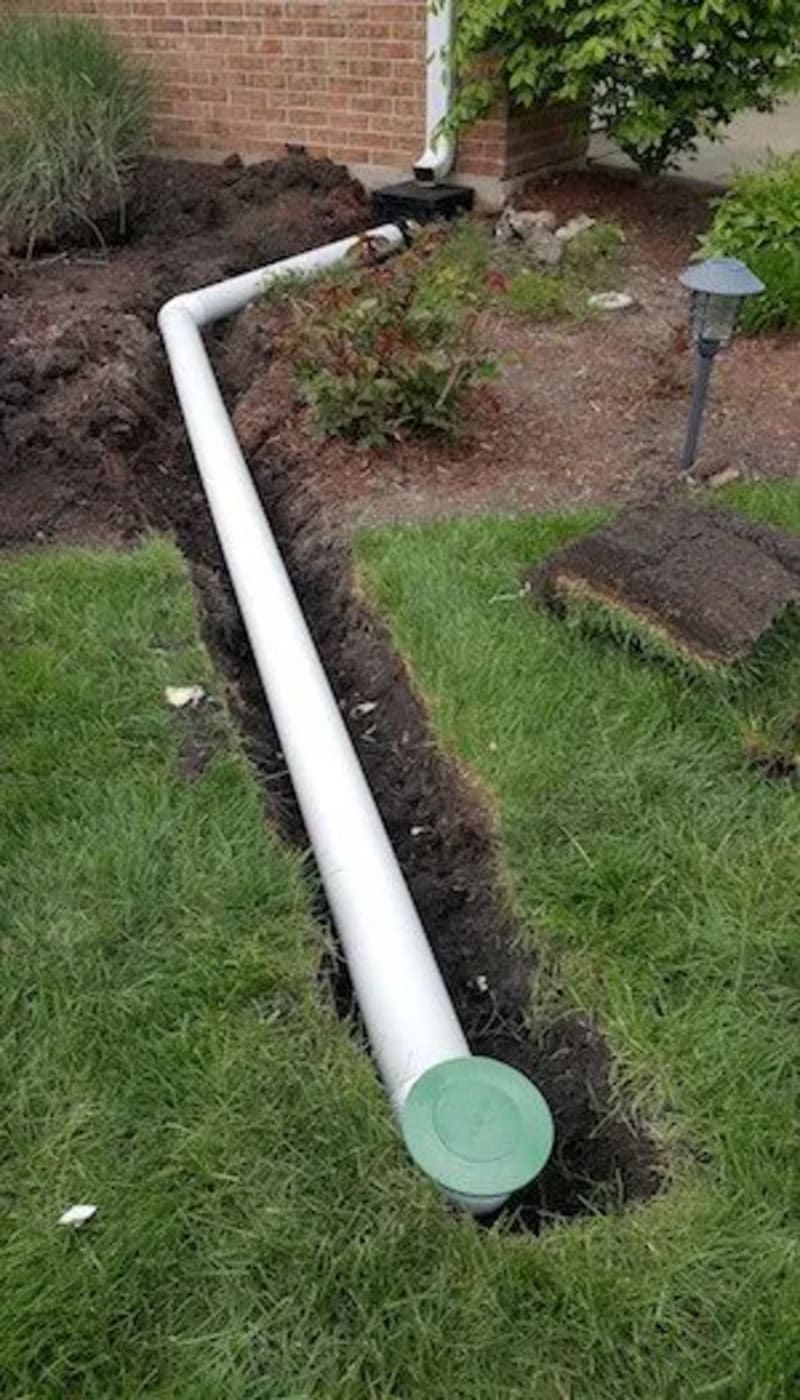
Underground drains solve this permanently. We connect your downspouts to buried PVC pipe that routes water 10, 20, even 30 feet or more from your foundation. The water discharges somewhere it can flow away naturally—at the curb, into a drainage swale, or at a low point in your yard. Out of sight, out of the way, and far from your basement walls.
Know the Difference
Underground Drains vs. French Drains
People use these terms interchangeably, but they're actually different systems that solve different problems.
Underground downspout drains (what we install) use solid PVC pipe to route roof water from your gutters to a discharge point away from the house. The pipe isn't perforated—water goes in at the downspout and comes out at the other end. Simple and effective for managing roof runoff.
French drains use perforated pipe surrounded by gravel to collect groundwater that's already in the soil. They're designed to intercept subsurface water before it reaches your foundation—a different problem than managing roof runoff.
Many homes need both systems working together. The underground downspout drains handle the thousands of gallons coming off your roof. The French drain (if you have one) handles water that seeps through the soil toward your foundation. They complement each other but shouldn't be connected—you don't want roof water dumping into your French drain and overwhelming it.
Where the Water Goes
Discharge Options for North Alabama
Pop-Up Emitters
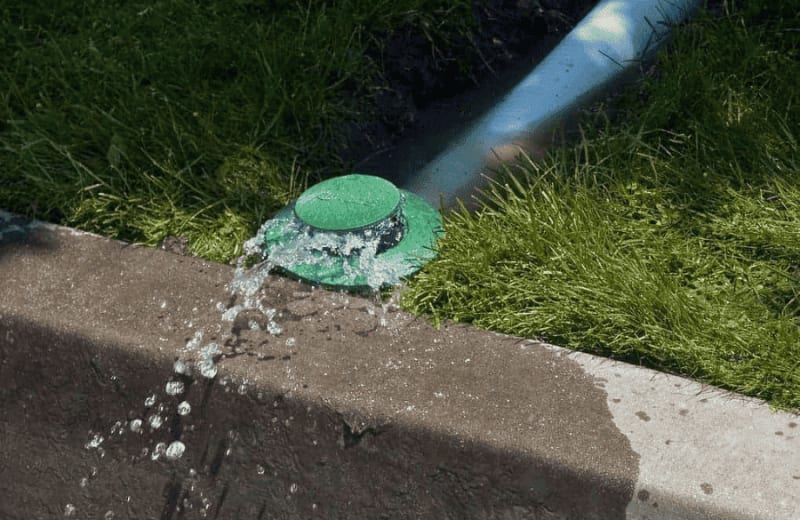
The most common solution. A spring-loaded cap sits flush with your lawn until water pressure opens it. Water disperses across the yard, then the cap closes again. Clean look, no tripping hazard, works well in most yards. We install them where the ground slopes away from the house.
Daylight Discharge
The pipe simply exits at grade level—usually at a slope, retaining wall, or property edge where water can flow away naturally. No moving parts to fail. Works great when you have natural grade working in your favor. Common in hilly areas like Hampton Cove and Big Cove.
Curb or Storm Drain
Where allowed, we can route water directly to the street curb or connect to existing storm drains. Gets water completely off your property. Permits may be required depending on your municipality—we handle the details.
Drainage Swales
If your property has a natural low area or drainage swale, that's often the best discharge point. Water follows the path it would naturally take anyway—we just help it get there faster without saturating the soil around your foundation first.
Dry Wells
A buried chamber filled with gravel that lets water slowly percolate into the soil. Can work in sandy or loamy soil, but we don't often recommend them in North Alabama's clay. The clay doesn't absorb water fast enough—the well fills up and has nowhere to drain.
Rain Gardens
A landscaped depression planted with water-tolerant plants. The drain discharges into the garden, which absorbs the water slowly. Attractive option for environmentally-minded homeowners, but requires proper plant selection and maintenance.
For most North Alabama homes, pop-up emitters or daylight discharge work best. We'll evaluate your property's slope, soil, and layout to recommend the right solution.
Is This You?
When Underground Drains Make Sense
Not every home needs buried drainage. But if any of these describe your situation, it's worth a conversation:
Water in the basement or crawlspace. If you're getting moisture after heavy rains, poor drainage is usually the culprit. Underground drains move water far from the foundation before it can seep in.
Erosion around your foundation. See channels or washouts where downspouts discharge? That water is eroding soil away from your foundation. Underground routing eliminates the erosion and the eyesore.
Clay soil that won't absorb water. Red clay is everywhere in North Alabama. Water pools on top instead of soaking in. Extensions just move the pooling; underground drains move the water completely away.
Flat yard with no natural drainage. If your yard doesn't slope away from the house, water has nowhere to go. Underground drains create the drainage path that nature didn't provide.
Flood-prone areas near Wheeler or the Tennessee River. Homes in Decatur, Mooresville, and other low-lying areas near the river already deal with high water tables. Good drainage is essential—underground drains are part of the solution.
Tired of surface extensions. Corrugated tubes across your lawn, disconnected every time you mow, forgotten during storms. Underground drains are the permanent, invisible solution.
How It Works
Underground Drain Installation Process
Here's what to expect when we install underground drains at your home:
Site Evaluation
We assess your property's slope, identify the best discharge points, and plan the pipe routing. Where does water naturally want to flow? Where can we discharge without creating new problems? We figure this out before we dig.
Utility Location
Before any digging, we call 811 to have underground utilities marked. Gas lines, electrical, cable, irrigation—we need to know where everything is. This step is non-negotiable.
Trench Excavation
We dig trenches from each downspout to the discharge point. Minimum depth is 6-8 inches; we go deeper in high-traffic areas. The trench slopes downward—at least 1/8 inch per foot—so water flows by gravity.
Pipe Installation
We lay 4-inch Schedule 40 PVC pipe (or corrugated in some applications). Solid pipe, not perforated—we're routing water, not collecting it. Connections are sealed to prevent leaks and root intrusion.
Cleanout Access
We install cleanout access points where the downspout connects to the buried pipe. If the system ever clogs, you can open the cleanout and flush it with a hose. Simple maintenance access prevents bigger problems.
Discharge Installation
Pop-up emitter, daylight exit, or whatever discharge method suits your property. We verify proper function by running water through the system before we backfill.
Backfill & Restoration
We backfill the trenches, compact the soil, and restore your lawn as close to original as possible. Some settling may occur over the first few weeks—that's normal. Grass will grow back over the trenches.
Most installations take 1-2 days depending on the number of downspouts and distance to discharge points. We clean up thoroughly—you'll barely know we were there except for the fresh soil over the trenches.
Local Expertise
Underground Drainage Considerations Across North Alabama
Madison & Harvest (New Construction): Many newer subdivisions have HOA requirements about drainage and landscape appearance. Underground drains keep everything invisible while solving drainage problems. Builders often skip proper drainage—we fix what they didn't do right.
Hampton Cove & Big Cove: Hillside properties against Monte Sano have natural slope working in their favor. Daylight discharge is often the simplest solution—pipe exits at the lower edge of the property where water would flow anyway.
Decatur & Wheeler Basin: Homes near Wheeler Wildlife Refuge and the Tennessee River floodplain deal with high water tables. Underground drains are essential, but discharge planning requires extra care. We need to route water where it won't just flow back toward the house.
Historic Neighborhoods (Five Points, Twickenham): Older homes often have existing underground drainage that's failed, clogged, or was never adequate. We can tie into existing systems or replace them entirely with modern PVC.
Athens, Hartselle & Smaller Towns: Typically fewer restrictions on drainage discharge. More options for routing to ditches, swales, or property edges. Rural properties can often discharge to daylight without worrying about neighbors or easements.
Common Questions
Frequently Asked Questions
They solve different problems. Underground downspout drains use solid pipe to route roof water from your gutters away from the foundation. French drains use perforated pipe surrounded by gravel to collect groundwater that's already in the soil. Many homes need both—underground drains for roof runoff and French drains for subsurface water.
At minimum, 10 feet from your foundation—but further is better. In North Alabama's red clay soil, we often run drains 20-30 feet or more, discharging at the curb, into a drainage swale, or at a low point in the yard where water naturally flows away from the house.
Generally no, residential underground gutter drains don't require permits in most North Alabama jurisdictions. However, if you're connecting to a storm sewer or making changes that affect neighboring properties, permits may be required. We handle the details and know local requirements.
Yes, typically where the downspout connects to the buried pipe. Debris that gets past your gutters can accumulate at that junction. We install cleanout access points so you can flush the system if needed. Gutter guards also help by keeping debris out of the system in the first place.
Pop-up emitters work well for most yards—they stay flush until water pressure opens them, then close again. For properties with good slope, daylight discharge (pipe exits at grade) is simple and effective. Dry wells can work but aren't ideal in clay soil since the water has nowhere to go.
Properly installed PVC underground drains last 25-50 years or more. The pipe itself doesn't wear out—problems usually come from clogs, root intrusion, or ground settling that changes the slope. Quality installation with proper slope and cleanout access prevents most issues.
There will be trenches across your yard—no way around that. We restore the soil level and the grass will grow back over 4-6 weeks. Some homeowners choose to overseed the trenched areas. The temporary disruption is worth the permanent drainage solution.
Yes—we connect to your existing downspouts. If your downspouts are undersized (2x3 instead of 3x4), we might recommend upgrading them at the same time so the whole system can handle heavy rainfall. But the underground portion works with whatever gutter system you have.
Service Areas
Underground Drain Installation Across North Alabama
We install underground drainage systems throughout the Tennessee Valley. Find your city below:
Don't see your city? Give us a call — we likely serve your area.
Ready for Permanent Drainage?
Tired of surface extensions? Dealing with water near your foundation? Let's talk about underground drains. We'll come out, assess your property, and give you a straight answer about what makes sense for your situation.
Schedule Free EstimateMON-FRI 8:00AM-5:00PM