
Foundation Protection
Downspouts for North Alabama Homes
Here's something that surprises a lot of homeowners: your gutters can be working perfectly and you'll still get water problems if your downspouts aren't doing their job. Every downspout should discharge at least 4-6 feet away from your foundation—and in North Alabama's red clay, that's often not far enough.
The Local Reality
Why Downspouts Matter More in North Alabama
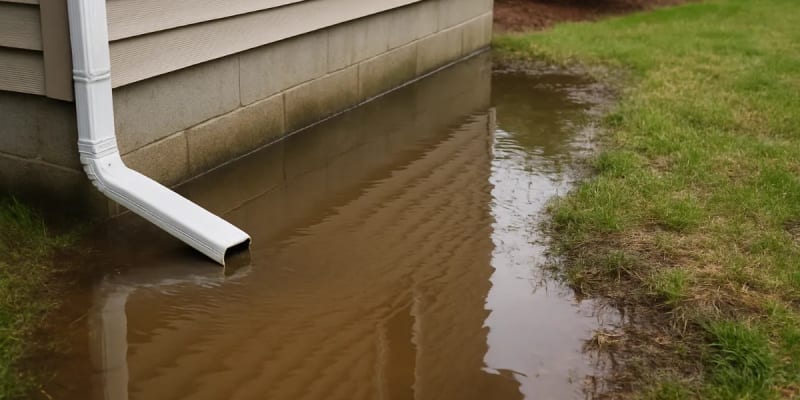
The red clay soil around Huntsville doesn't drain. At all. Sandy or loamy soil absorbs rainwater and lets it percolate away from your house. Red clay just sits there holding water like a sponge that's already full. Dump water right at your foundation and it has nowhere to go but against your basement walls.
That's why downspout placement and extensions matter so much here in the Valley. Your gutters can be perfect—seamless, properly sized, flowing great—but if your downspouts dump water two feet from the foundation, you'll still end up with moisture in the basement, cracks in the slab, and soil erosion around the house.
We've seen it hundreds of times. A homeowner calls about water in the basement. We check the gutters—they're fine. But the downspouts terminate right at the foundation, and after every rain, water pools against the house. The fix isn't a new gutter system. It's proper downspout routing.
Our Approach
What We Evaluate on Every Downspout Job
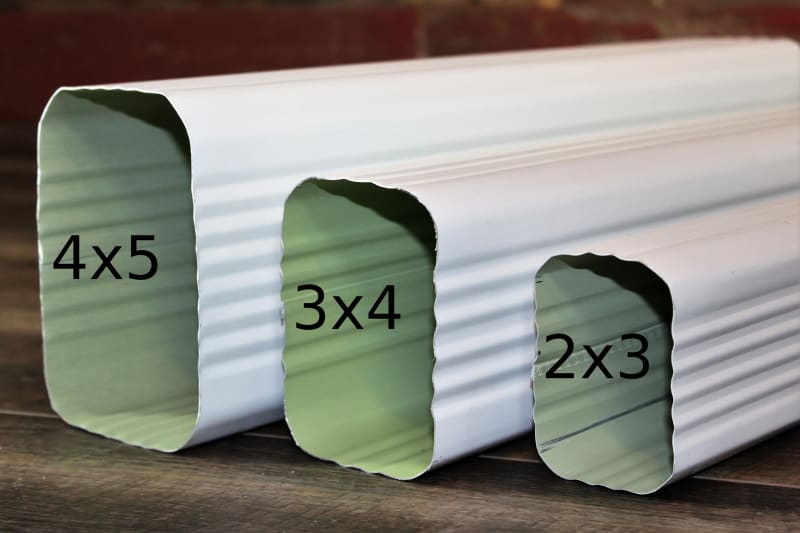
Size: Older homes often have 2x3 inch downspouts—adequate for gentle rain but overwhelmed during Tennessee Valley thunderstorms. We typically upgrade to 3x4 inch downspouts that handle 50% more water volume. When paired with 6-inch gutters, they keep up with even the heaviest storms.
Placement: You need enough downspouts to handle your roof's water load. General rule: one downspout for every 20-30 feet of gutter. But roof pitch, total square footage, and valley placement all factor in. We'd rather install one extra downspout than have water overflow.
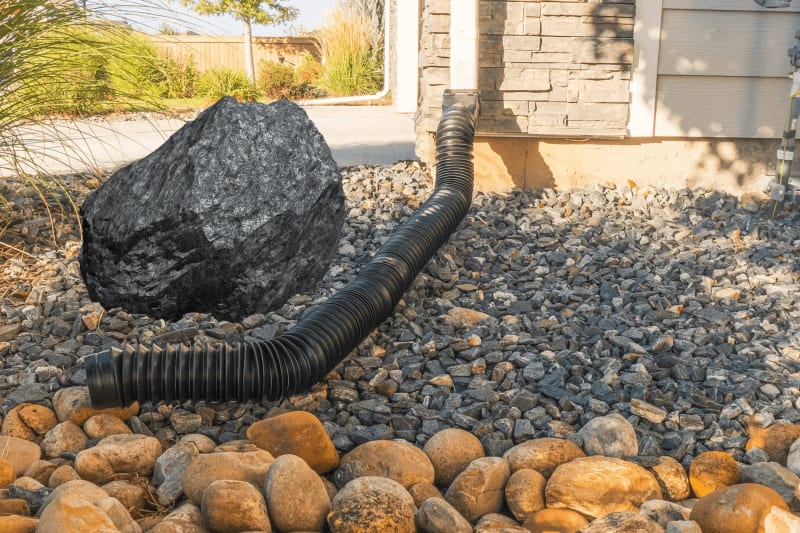
Discharge Point: This is where most downspout systems fail. Water needs to end up well away from your foundation—at least 4-6 feet, preferably more. On red clay soil, we often recommend 10-foot extensions or underground routing that moves water completely off the property.
Elbow Configuration: Every elbow adds friction that slows water flow. Too many sharp turns and debris gets stuck, especially pine needles. We configure downspout routing with the minimum elbows needed while still directing water where it needs to go.
The Details
Downspout Sizing: 2x3 vs. 3x4
2x3 Inch Downspouts
Standard on most homes built before 2000. Adequate for moderate rainfall and 5-inch gutters. During heavy Tennessee Valley storms, they can back up and cause overflow—especially if there's any debris restriction. Fine for smaller homes or shed roofs.
3x4 Inch Downspouts
What we recommend for most North Alabama homes. Handles 50% more water volume than 2x3. Essential when paired with 6-inch gutters. Less likely to clog because debris flows through instead of getting stuck. The standard for new construction in high-rainfall areas.
Round Downspouts
Sometimes used on historic homes or for aesthetic reasons. Available in 3-inch and 4-inch diameters. Can handle good volume but are less common—parts and colors are harder to match. We install them when the look matters more than maximum capacity.
Full-Size Cutouts
Here's something most homeowners don't know: the hole connecting your gutter to the downspout (the outlet) matters as much as the downspout itself. We cut full-size outlets that match the downspout dimensions—no restrictive transitions that slow water flow.
For North Alabama's 54 inches of annual rainfall—much of it coming in heavy afternoon storms—we recommend 6-inch gutters with 3x4 downspouts and full-size cutouts. It's the combination that actually keeps up.
Getting Water Away
Downspout Extension Options
The downspout gets water from the roof to the ground. The extension gets it away from your house. Here are the options:
Splash Blocks: The basic option. A plastic or concrete tray that sits under the downspout and directs water away. Better than nothing, but water still ends up close to the foundation. Fine for areas where the ground slopes away from the house naturally.
Surface Extensions: Rigid or flexible tubes that extend the downspout 4-10 feet away from the foundation. Inexpensive and easy to install. Downside: they're visible, can be tripping hazards, and need to be moved for mowing.
Roll-Up Extensions: Extensions that coil up when dry and unroll when water flows through them. Clever idea, but in our experience they clog with debris and fail within a few years. We don't recommend them.
Underground Drainage: The best solution. We connect the downspout to buried PVC pipe that routes water far from the house—to the curb, a drainage swale, or a pop-up emitter in the yard. Out of sight, doesn't interfere with mowing, and moves water exactly where you want it. Learn more about underground drains.
What We See
Common Downspout Problems in North Alabama
After 20+ years of gutter work in the Tennessee Valley, these are the downspout issues we fix most often:
Too Few Downspouts
Homes with long gutter runs and only one downspout at the end. Water backs up during heavy rain and overflows before it can reach the downspout. Solution: add downspouts so no section of gutter is more than 20-30 feet from an outlet.
Undersized Downspouts
Builder-grade 2x3 downspouts paired with 5-inch gutters. Works fine for light rain but can't keep up with Tennessee Valley thunderstorms. We upgrade to 3x4 downspouts with full-size cutouts.
Discharge Too Close to Foundation
Downspouts that terminate right at the foundation, dumping water against the house. The red clay doesn't absorb it—it just pools and pushes against basement walls. Extensions or underground routing solve this.
Clogged at the Elbow
Debris—especially pine needles—gets stuck at the first elbow where the downspout transitions from gutter to vertical drop. Strainers help prevent this, but regular cleaning is still needed.
Disconnected from Underground Drains
Older homes with underground drainage where the downspout has separated from the buried pipe. Water goes into the ground right at the foundation instead of routing away. We reconnect and often upgrade the entire system.
Wrong Elbow Angles
Too many sharp turns or elbows that create debris traps. Every 90-degree angle slows water and catches leaves. We reconfigure routing with 45-degree elbows where possible and minimize total direction changes.
Common Questions
Frequently Asked Questions
At minimum, 4-6 feet from your foundation. In North Alabama, where the red clay soil doesn't absorb water, we often recommend extensions that route water 10 feet or more away—or underground drainage that moves water completely away from the house.
For most North Alabama homes, we recommend 3x4 inch downspouts. These handle 50% more water than standard 2x3 downspouts—critical during heavy Tennessee Valley storms. Paired with 6-inch gutters, 3x4 downspouts ensure your system won't back up during downpours.
Usually means the discharge point is too close to the foundation or the ground isn't sloped away from the house. The red clay around Huntsville doesn't absorb water—it just sits there. You need extensions or underground drains to move water further away.
Generally, one downspout for every 20-30 feet of gutter. But in North Alabama's heavy rainfall, more is often better. We'd rather have one extra downspout than have water overflow during storms. We'll assess your specific roof layout and recommend the right number.
Yes—and in North Alabama, underground routing is often the best solution. We connect downspouts to buried PVC pipes that discharge water well away from your foundation, often at the curb or into a drainage swale. This keeps your yard looking clean while solving the drainage problem completely. Learn more about underground drains.
Most clogs happen where the gutter meets the downspout—debris collects at that transition point. Pine needles are especially problematic because they slip through most gutter guards but clump together in the downspout. Regular cleaning or downspout strainers help prevent this.
Usually means the straps holding it to the wall have loosened or the fascia behind it has rotted. Heavy rain puts weight on the downspout, and over time the fasteners work loose—especially if they were installed into rotting wood. We'll re-secure the downspout and repair any damaged fascia if needed.
Service Areas
Downspout Services Across North Alabama
We install, repair, and upgrade downspouts throughout the Tennessee Valley. Find your city below:
Don't see your city? Give us a call — we likely serve your area.
Need Downspout Work?
Whether you need new downspouts, extensions, or a complete drainage assessment, we're here to help. We'll come out, take a look, and tell you what we see—no pressure, just straight talk about what your house needs.
Schedule Free EstimateMON-FRI 8:00AM-5:00PM